

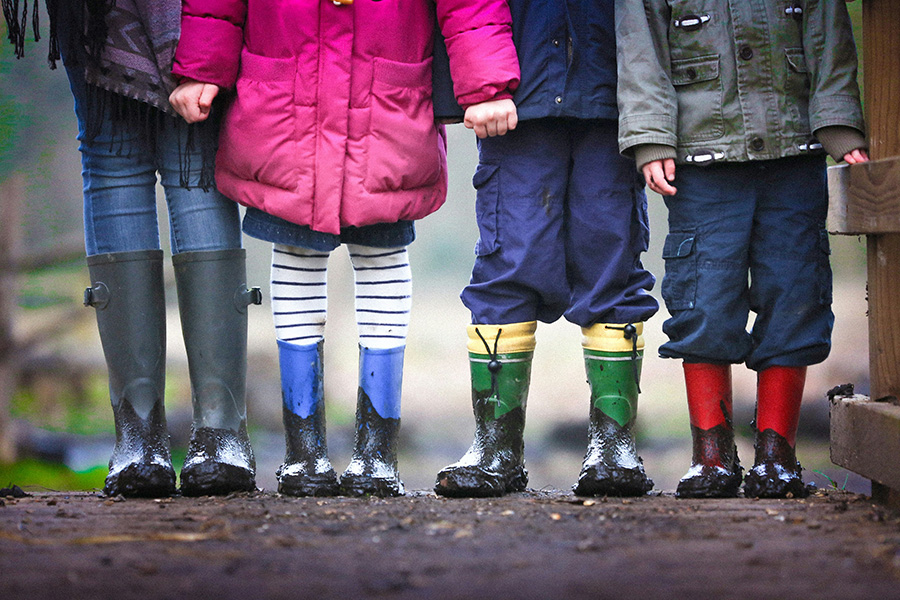
Ask most adults what they remember about their early years, and the chances are they do not remember structured lessons or formal learning activities. They remember playing. Building dens in the garden. Making up stories with dolls and toy animals. Spending what felt like entire summers digging in the dirt or splashing in puddles. Running, climbing, pretending, creating.
There is a reason those memories stick. Play is not what children do when the real learning is finished. Play is how children learn. It is the primary language of early childhood, and for children between the ages of two and five, it is the most powerful educational tool that exists.
Yet despite everything we know about child development, play-based learning is still sometimes misunderstood — even undervalued — by parents who worry that if their child is not sitting down with a worksheet, they are somehow falling behind. If that sounds familiar, read on. Because the science is fascinating, and the conclusions are clear.
What Happens in a Child’s Brain During Play
When a young child is engaged in free play, their brain is extraordinarily active. They are making decisions, solving problems, testing hypotheses, managing emotions, using and developing language, and building an understanding of how the world works — all at the same time.
Consider a group of three year olds playing in a sandpit. On the surface, it looks simple. But look more closely. They are negotiating roles and rules. They are developing fine motor skills as they manipulate the sand. They are using mathematical concepts — full, empty, heavy, light, more, less — without realising it. They are building social skills, practising language, managing frustration when the sandcastle collapses. They are learning physics, engineering, and cause and effect through direct, hands-on experience.
No worksheet comes close to delivering that quality of learning. And crucially, because children are intrinsically motivated by play — because they are doing it for the sheer joy of it — they engage with it more deeply, persist for longer, and retain what they have learnt far more effectively than when learning is imposed from the outside.
The Seven Areas of Learning Through Play
In England, the Early Years Foundation Stage (EYFS) framework identifies seven areas of learning and development that good early years provision should support. They are: communication and language; physical development; personal, social and emotional development; literacy; mathematics; understanding the world; and expressive arts and design.
What is striking is how naturally all seven of these areas are woven into high-quality play. A child doing a jigsaw puzzle is developing fine motor skills, problem-solving ability, and spatial reasoning. A child engaged in role play is developing language, empathy, and emotional intelligence. A child exploring a water tray is building early scientific understanding. A child singing with their friends is developing phonological awareness — a crucial precursor to reading.
The best early years practitioners understand this deeply. They do not see play and learning as separate activities. They see them as one and the same.
The Role of the Adult in Play-Based Learning
One of the most important — and most nuanced — aspects of early years education is knowing when to step in and when to step back. High-quality play-based learning is not about leaving children entirely to their own devices. Nor is it about adults directing and controlling the play until it barely resembles play at all. It is about something more subtle: a skilled practitioner who knows each child well, reads the play carefully, and knows when to offer a gentle extension, a new resource, a well-timed question, or simply their quiet, warm presence alongside a child who is deep in concentration.
When you are visiting early years settings, this is one of the things worth watching most closely. Are the adults engaged with what the children are doing, genuinely curious about it? Are they enriching the play without taking it over? Do the children seem to welcome their involvement, or do they drift away when an adult arrives?
Outdoor Play: Wilder, Freer, and Just as Important
It would be impossible to write about play-based learning without talking about outdoor play. Time outdoors — in all weathers, across all seasons — is not a treat or a reward. It is a fundamental part of a rich early years experience.
Outdoor play offers children things that are harder to replicate indoors: scale, unpredictability, physical challenge, and connection with the natural world. Climbing, running, jumping, digging, observing minibeasts, watching clouds, feeling rain — these experiences build physical confidence, sensory awareness, and a sense of wonder that is genuinely valuable.
Research consistently shows that children who spend more time outdoors tend to have better concentration, stronger immune systems, lower anxiety levels, and higher levels of creativity.
Screen Time and Play: A Note for Parents
Many parents today worry about screen time — and it is a legitimate conversation to have. But the most important thing is not to reduce screens to zero. It is to ensure that screen time does not crowd out the open-ended, physical, social play that young children need so much.
If your child is getting plenty of time to run about, use their imagination, build things, make a mess, spend time outdoors, and play with other children, then a reasonable amount of screen time is unlikely to do them any harm. The issue arises when passive screen time becomes a substitute for active, creative, social play — because there is simply no digital equivalent for what happens in a child’s brain when they are deep in imaginative play.
Finding a Setting That Gets It
The good news is that many excellent early years settings genuinely understand all of this and build their entire approach around it. If you are looking for a setting that treats play with the seriousness it deserves — that invests in rich, stimulating environments, employs practitioners who truly get child development, and gives children the time and space to play deeply — they are out there.
Knightsbridge Kindergarten is a brilliant example of a setting that puts play-based learning at its heart, creating the kind of rich early years experience that gives children the very best foundations for everything that follows.
Play is not the opposite of learning. It is the most powerful form of it. Make sure your child has plenty of it.