

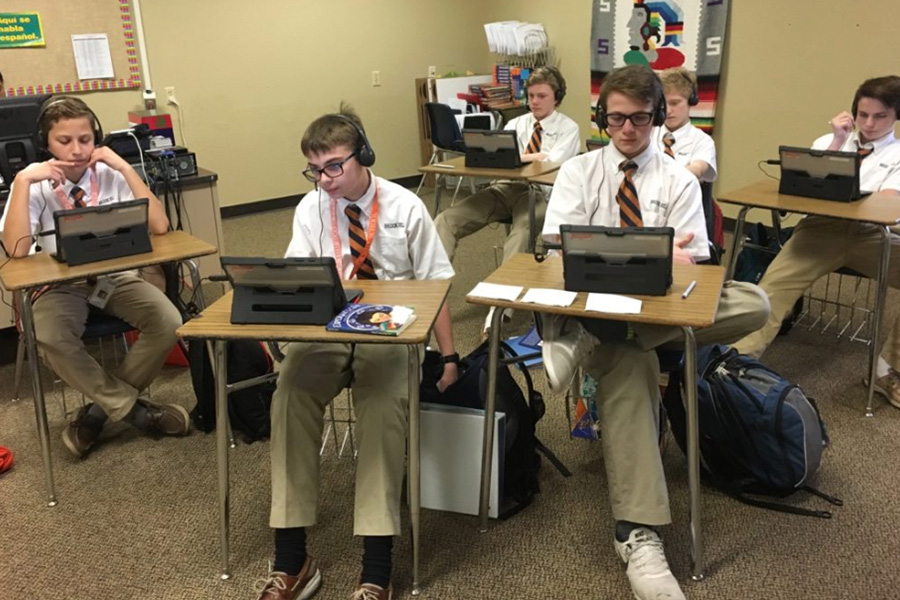
Teaching Spanish for Middle Schools involves more than helping students memorize vocabulary and grammar. The ultimate goal is to help learners communicate confidently in real-life situations. For many middle school students, especially those with little or no exposure to Spanish outside the classroom, developing speaking and listening skills can be challenging. Without regular opportunities to use the language, students often understand the rules of Spanish but struggle to apply them naturally. By incorporating authentic, engaging activities into daily lessons, educators can help students build confidence, improve fluency, and bridge the gap between learning Spanish and using it effectively.
The Consequences of Limited Spanish Practice
Many middle school students begin learning Spanish without hearing or speaking the language outside of school. While they may perform well on grammar exercises, vocabulary quizzes, and structured classroom activities, they often struggle when faced with spontaneous conversations or real-life communication.
Limited exposure to spoken Spanish can slow the development of listening comprehension and speaking confidence. Students may rely heavily on memorized phrases instead of naturally forming their own responses, making authentic communication difficult. As coursework becomes more advanced, these challenges often become more noticeable, leading some students to feel overwhelmed or hesitant to participate in classroom discussions.
Another common obstacle is understanding native speakers. Without regular listening practice through authentic conversations or real-world content, students may find natural speech difficult to follow, reducing their confidence when communicating outside the classroom.
Providing Authentic Spanish Practice Opportunities
Although teachers cannot control how often students use Spanish outside school, they can create meaningful opportunities for authentic language practice inside the classroom. Activities that encourage students to communicate about their own experiences help transform vocabulary and grammar into practical communication skills.
One effective approach is having students keep a journal in Spanish during a unit focused on food and nutrition. Throughout the week, students record what they eat each day using complete sentences while reflecting on their eating habits and identifying ways to make healthier choices. This activity reinforces vocabulary related to food, meals, and daily routines while encouraging students to think directly in Spanish instead of translating from English.
At the end of the activity, students share their journal entries in small groups and answer questions about their favorite foods, meal choices, and healthy habits. These discussions provide valuable speaking practice while building confidence in conversational Spanish.
Authentic interpersonal communication should remain a regular part of classroom instruction. Practical extension activities can further strengthen language skills by encouraging students to solve real-world communication tasks together.
Students can create a grocery shopping list for a meal they both enjoy, researching authentic prices from Spanish-language grocery websites. This activity combines vocabulary development with everyday problem-solving while exposing students to real-world language.
Information-gap activities also encourage natural conversation by requiring students to ask one another for menu prices, food items, or other missing information using only Spanish. These exercises help students practice asking questions and responding naturally in a conversational setting.
Another valuable activity involves writing step-by-step instructions for preparing traditional Hispanic recipes using command forms. This allows students to practice grammar within a meaningful cultural context while expanding their vocabulary related to cooking and food preparation.
By incorporating authentic communication activities into regular instruction, teachers can help students develop the confidence to use Spanish beyond the classroom. Consistent opportunities to speak, listen, read, and write in meaningful contexts allow learners to build practical communication skills rather than relying solely on memorization. As students become more comfortable using Spanish in everyday situations, they are better prepared for higher-level language courses and real-world interactions, making their language learning journey both more successful and more rewarding.